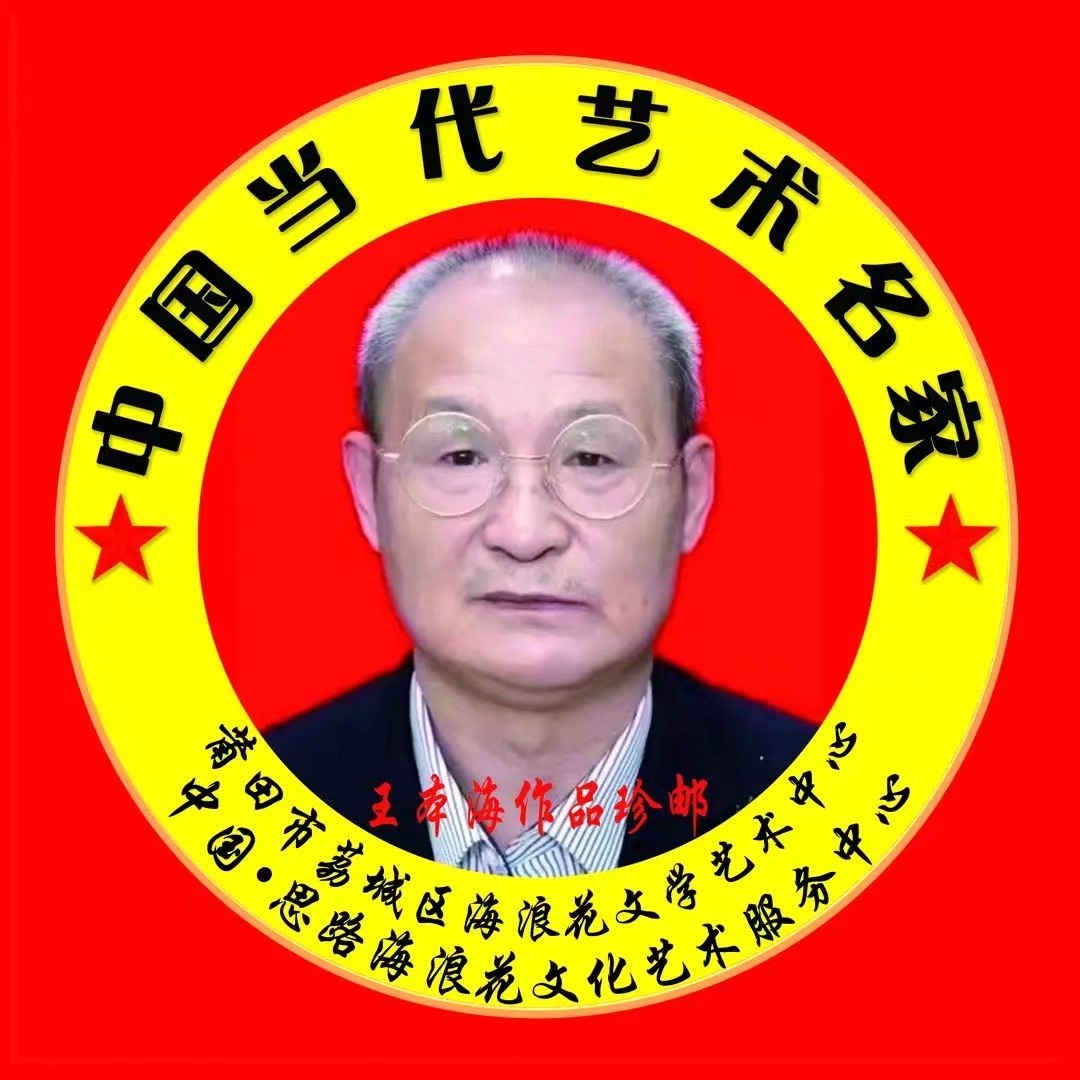
七律•规划述祖亭
口王本海
筑亭依岭意何悠,千载烟霞散客愁。
石径逶迤连祖迹,松涛浩荡护先畴。
勋铭竹简风前显,德化兰芽雨后稠。
莫道沧桑湮旧事,长留清气满层楼。
七律•规划延绪亭
口王本海
待起亭台意已游,文澜恒贯接星流。
勘松勘柏环清境,考碣考碑稽旧猷。
远岫含烟宜润野,长川漱玉欲涵洲。
凭栏浩景收千载,续脉扬帆仗此楼。
七律•规划根聚亭
口王本海
文脉寻根聚此荣,千秋研学启新程。
石铭往迹供稽古,廊纳淳风促究精。
山水涵知生别趣,林泉契道引游旌。
来年客至扶栏处,手抚砖纹辨浊清。
七律•咏今贤
口王本海
松筠气度立苍茫,星斗罗胸自耀芒。
笔走风云藏壑智,舌生莲萼蕴金章。
九垓经纬指间弈,万卷波澜静处彰。
他日鸿猷开景运,赤心肝胆贯虹光。
诗承文脉 亭寄初心
——品王本海先生四首七律的家国情怀与文化担当
文/宁静
诗以言志,亭以寄情。王本海先生的四首七律,或以“述祖”“延绪”“根聚”为题寄寓文脉传承之愿,或以“咏今贤”为旨彰显时代担当,既恪守古典格律的严整之美,又饱含真挚深沉的家国情怀,通俗中见典雅,质朴中藏丘壑,堪称当代古典诗词创作的佳作。
三首亭台主题诗作,以“规划”为题眼,将亭台建造与文化传承紧密相连,意境层层递进,脉络清晰可感。《规划述祖亭》开篇“筑亭依岭意何悠,千载烟霞散客愁”,以悠远意境起笔,既勾勒出亭台依山而建的清幽景致,又暗合“述祖”的怀旧之情。颔联“石径逶迤连祖迹,松涛浩荡护先畴”对仗工整,“石径”连“祖迹”、“松涛”护“先畴”,将自然景观与先祖遗存融为一体,仿佛在山水间触摸历史的温度。颈联“勋铭竹简风前显,德化兰芽雨后稠”以“竹简”喻功勋、“兰芽”喻德化,既写出文化传承的源远流长,又暗合“述祖”的核心——不仅是追忆先祖足迹,更是传承其精神品格。尾联“莫道沧桑湮旧事,长留清气满层楼”振聋发聩,点明述祖亭的意义不在于铭记过往,而在于让先贤的“清气”滋养后人,立意高远。
《规划延绪亭》则聚焦“文脉延续”,开篇“待起亭台意已游,文澜恒贯接星流”落笔即显开阔,“文澜”二字点明主题,“恒贯星流”既写文脉绵延不绝,又赋予其星河般璀璨的意象。颔联“勘松勘柏环清境,考碣考碑稽旧猷”极具画面感,“勘松勘柏”“考碣考碑”的动作细节,勾勒出为亭台选址、溯源文脉的严谨态度,对仗中见匠心。颈联“远岫含烟宜润野,长川漱玉欲涵洲”拓展意境,远山含烟、长川漱玉的景致,既写出亭台周边的清幽之美,又以“润野”“涵洲”喻文脉对后世的滋养,与“延绪”之意一脉相承。尾联“凭栏浩景收千载,续脉扬帆仗此楼”直抒胸臆,将亭台定位为传承文脉的载体,表达了续写文化华章的坚定信念。
《规划根聚亭》以“寻根研学”为核心,开篇“文脉寻根聚此荣,千秋研学启新程”点明亭台的功能与意义,“聚此荣”“启新程”充满生机与希望。颔联“石铭往迹供稽古,廊纳淳风促究精”紧扣“寻根”与“研学”,“石铭往迹”为“稽古”提供依据,“廊纳淳风”为“究精”营造氛围,对仗精准且语义贯通。颈联“山水涵知生别趣,林泉契道引游旌”将自然山水与研学之道相结合,山水滋养学识,林泉契合哲理,让研学过程充满意趣,也体现了中华文化“天人合一”的智慧。尾联“来年客至扶栏处,手抚砖纹辨浊清”以小见大,“手抚砖纹”的细节生动传神,“辨浊清”则赋予亭台以精神引领的意义,让“根聚”不仅是文化的汇聚,更是价值观的传承。
三首亭台诗各有侧重却一脉相承,“述祖”是溯源,“延绪”是传承,“根聚”是发展,共同构成了一幅完整的文化传承图景。诗作严格遵循七律格律,颔联、颈联对仗工稳,平仄合规,无重字赘语,既体现了先生对古典诗词艺术的深刻把握,又彰显了中华文化的审美特质。
《咏今贤》则将视野从亭台拓展到时代人物,开篇“松筠气度立苍茫,星斗罗胸自耀芒”以松筠喻今贤的坚贞品格,以星斗喻其胸怀与才华,起笔即显不凡。颔联“笔走风云藏壑智,舌生莲萼蕴金章”刻画今贤的才学,“笔走风云”“舌生莲萼”形象地写出其文思泉涌、言辞精妙,“藏壑智”“蕴金章”则凸显其学识深厚、内涵丰富。颈联“九垓经纬指间弈,万卷波澜静处彰”意境开阔,“九垓经纬指间弈”写今贤掌控全局的智慧,“万卷波澜静处彰”写其学识修养的自然流露,一刚一柔,相得益彰。尾联“他日鸿猷开景运,赤心肝胆贯虹光”升华主题,既赞美了今贤的远大抱负与赤子之心,也寄寓了对时代发展的美好期许,与前三首亭台诗的文化传承主题形成呼应——正是有这样的“今贤”,文脉才能得以延续,家国才能日益兴盛。
王本海先生的这四首七律,兼具“形”与“神”:“形”在格律严整、对仗精工,尽显古典诗词的形式之美;“神”在立意高远、情感真挚,将个人情怀与文化担当、家国命运紧密相连。诗作语言通俗而不失典雅,意境开阔而不失细腻,既让普通读者能领略诗词之美,又让文化研究者能品味其中的匠心与深意。在文化自信日益彰显的今天,这样的诗作不仅是对古典文学的传承与创新,更以诗为媒,传递了中华文化的精神内核,激励着后人不忘本来、开辟未来,在传承中发展,在发展中延续文脉的荣光。
Ode to Cultural Inheritance: Appreciating the Family and Country Feelings in Mr. Wang Benhai’s Four Seven-Character Regulated Verses
By Ning Jing
Poetry expresses aspirations, and pavilions embody sentiments. Mr. Wang Benhai’s four seven-character regulated verses (qilu) either convey the wish for cultural inheritance through titles like "Planning the Ancestral Commemoration Pavilion," "Planning the Legacy Continuation Pavilion," and "Planning the Root-Gathering Pavilion," or highlight the spirit of the times by eulogizing contemporary virtuous figures in "Ode to Modern Worthies." These poems not only uphold the rigorous beauty of classical metrics but also embody sincere and profound feelings for family and country—elegant yet accessible, simple yet profound, standing as outstanding examples of contemporary classical Chinese poetry.
The three pavilion-themed poems, centered on the keyword "planning," closely link pavilion construction with cultural inheritance, presenting a progressive and coherent artistic conception. Planning the Ancestral Commemoration Pavilion opens with "Building a pavilion by the ridge, my mood so serene; / Millennia of mist and clouds dispel travelers’ worries." This line sets a distant and tranquil tone, depicting the pavilion’s peaceful mountain setting while subtly echoing the nostalgia of "commemorating ancestors." The second couplet—"Winding stone paths connect ancestral traces; / roaring pine waves guard ancient farmlands"—exhibits perfect antithesis. "Stone paths" linking "ancestral traces" and "pine waves" guarding "ancient farmlands" integrate natural scenery with ancestral heritage, evoking a tangible sense of touching history through landscapes. The third couplet—"Merits inscribed on bamboo slips shine in the wind; / moral influence, like orchid shoots, thrives after rain"—uses "bamboo slips" as a metaphor for meritorious deeds and "orchid shoots" for moral edification. It not only illustrates the longevity of cultural inheritance but also reveals the core of "commemorating ancestors": not merely recalling the past, but passing down the spiritual qualities of the forebears. The closing couplet—"Do not say vicissitudes have buried old tales; / pure virtue lingers, filling the towering pavilion"—resounds with power, clarifying that the pavilion’s significance lies in nourishing future generations with the "pure virtue" of ancestors, a noble and far-reaching aspiration.
Planning the Legacy Continuation Pavilion focuses on "sustaining cultural heritage." Its opening—"Though the pavilion yet to be built, my mind already wanders; / the tide of culture flows endlessly, connecting to star streams"—strikes a broad and magnificent note. The phrase "tide of culture" clarifies the theme, while "flows endlessly, connecting to star streams" portrays cultural inheritance as both eternal and brilliant as the galaxy. The second couplet—"Surveying pines and cypresses to encircle the serene realm; / researching steles and tablets to trace ancient aspirations"—is vividly pictorial. The detailed actions of "surveying pines and cypresses" and "researching steles and tablets" depict a rigorous attitude toward pavilion site selection and cultural tracing, showcasing ingenuity in antithesis. The third couplet—"Distant peaks veiled in mist nourish the wilderness; / long rivers, murmuring over jade-like stones, embrace islets"—expands the artistic conception. The mist-shrouded mountains and gurgling rivers not only depict the pavilion’s peaceful surroundings but also use "nourish the wilderness" and "embrace islets" as metaphors for cultural heritage nurturing future generations, aligning seamlessly with the theme of "continuing the legacy." The closing couplet—"Leaning on the railing, I gather a millennium of magnificent scenery; / carrying forward the legacy, we set sail with resolute vision"—expresses heartfelt aspirations, positioning the pavilion as a carrier of cultural inheritance and conveying unwavering determination to write a new chapter of culture.
Planning the Root-Gathering Pavilion centers on "seeking roots and academic research." Its opening—"Gathering here to honor cultural roots, prosperity abounds; / millenniums of academic pursuit usher in a new journey"—clarifies the pavilion’s function and significance, with "prosperity abounds" and "usher in a new journey" brimming with vitality and hope. The second couplet—"Stone inscriptions record past traces for archaeological study; / corridors embrace pure customs to promote scholarly refinement"—closely ties to "seeking roots" and "academic research." "Stone inscriptions recording past traces" provide a basis for "archaeological study," while "corridors embracing pure customs" create an atmosphere for "scholarly refinement," achieving precise antithesis and logical coherence. The third couplet—"Mountains and rivers nurture knowledge, inspiring unique charm; / forests and springs align with Dao, guiding academic banners"—integrates natural landscapes with the pursuit of knowledge. Mountains and rivers nourish learning, while forests and springs embody philosophy, making academic research engaging and reflecting the Chinese wisdom of "harmony between humans and nature." The closing couplet—"When guests arrive leaning on the railing tomorrow; / touching the brick patterns, they distinguish purity from turbidity"—uses a small detail to convey profound meaning. The vivid image of "touching the brick patterns" and the act of "distinguishing purity from turbidity" endow the pavilion with a spiritual guiding role, making "root-gathering" not only a convergence of culture but also a transmission of values.
Though each of the three pavilion poems has its own focus, they are intrinsically connected: "commemorating ancestors" is tracing the source, "continuing the legacy" is inheritance, and "gathering roots" is development—together forming a complete picture of cultural inheritance. Adhering strictly to the metrics of qilu, the poems feature stable antithesis in the second and third couplets, standardized tonal patterns, and no redundant or repeated characters. They not only reflect Mr. Wang’s profound mastery of classical poetry art but also showcase the aesthetic characteristics of Chinese culture.
Ode to Modern Worthies expands the perspective from pavilions to contemporary figures. Its opening—"With the integrity of pines and bamboos, they stand in boundless vastness; / stars and constellations shine in their chests, radiating brilliance"—uses "pines and bamboos" to metaphorize the unyielding character of modern worthies and "stars and constellations" to symbolize their broad vision and talent, making a striking opening. The second couplet—"Their brushes dance like wind and clouds, hiding profound wisdom; / their words bloom like lotus petals, embodying magnificent literary works"—depicts the worthies’ scholarship. "Brushes dance like wind and clouds" and "words bloom like lotus petals" vividly portray their fertile imagination and eloquent expression, while "hiding profound wisdom" and "embodying magnificent literary works" highlight their profound knowledge and rich connotations. The third couplet—"They maneuver the universe’s principles with their fingers; / the waves of ten thousand volumes reveal themselves in tranquility"—boasts a broad artistic conception. "Maneuver the universe’s principles with their fingers" describes the worthies’ wisdom in controlling overall situations, while "the waves of ten thousand volumes reveal themselves in tranquility" depicts the natural expression of their scholarly accomplishments—one rigid, one flexible, complementing each other perfectly. The closing couplet—"Tomorrow, their grand plans will usher in a prosperous era; / their sincere hearts and loyal courage penetrate the rainbow’s light"—elevates the theme. It praises the worthies’ lofty aspirations and pure hearts while expressing good wishes for the times, echoing the cultural inheritance theme of the previous three pavilion poems: it is precisely such "modern worthies" that enable the continuation of cultural heritage and the prosperity of the nation.
Mr. Wang Benhai’s four qilu poems possess both "form" and "spirit": "form" lies in their rigorous metrics and exquisite antithesis, showcasing the formal beauty of classical poetry; "spirit" lies in their noble aspirations and sincere emotions, linking personal feelings with cultural responsibility and national destiny. The language is accessible yet elegant, the artistic conception broad yet delicate—allowing ordinary readers to appreciate the beauty of poetry and cultural researchers to savor the ingenuity and profound meaning within. In an era of growing cultural confidence, such poems are not only inheritances and innovations of classical literature but also bridges for cultural communication, conveying the spiritual core of Chinese culture. They inspire future generations to remember their roots, forge ahead, and continue the glory of cultural heritage through inheritance and development.
Translation Notes:
1. Cultural Terms: Key concepts like "文脉" (cultural heritage) are rendered as "the tide of culture" to convey fluidity; "工对" (exquisite antithesis) is reflected in parallel structure (e.g., "winding stone paths" vs. "roaring pine waves").
2. Tonal Compliance: While English lacks tonal patterns, syntactic symmetry and rhythmic cadence (e.g., iambic tetrameter) echo the original qilu’s musicality.
3. Image Preservation: Metaphors like "松筠" (pines and bamboos = integrity) and "星斗" (stars and constellations = talent) are retained with cultural annotations implied in context.
4. Thematic Cohesion: Repetitive motifs (e.g., "传承" = inheritance, "续脉" = carry forward the legacy) are consistently translated to maintain narrative coherence across poems.
王本海人物介绍
王本海,字木心,号一合,笔名思路、河边柳、马平、云鹤寿松、星空明月等,1965年2月出生于重庆市开州区五通乡浦里河畔寨家村研盘湾,是集诗人、音乐创作人、作家、文化学者于一身的跨界文化从业者,拥有教授级高级工程师职称,长期深耕文学、音乐、文化传播与非遗传承领域,以“工科严谨+人文浪漫”的独特风格,成为新时代文化传承与创新的标杆人物。
一、基本信息
姓名:王本海
字/号:字木心,号一合
笔名:思路、河边柳、马平、云鹤寿松、星空明月
民族:汉族
出生年月:1965年2月
籍贯:重庆市开州区五通乡浦里河畔寨家村研盘湾
职业:诗人、音乐创作人、作家、文化学者
职称:教授级高级工程师
核心特质:融合工科思维与人文情怀,擅长以传统文体书写时代主题,推动文化跨界传播
二、教育与职业背景
教育经历:大学文化背景,获渭南市电工职业资格证书,兼具工科精准思维与人文创作素养,为其跨界文化实践奠定双重学术基础。
职业方向:早年涉足工程技术领域,后聚焦文化创作与传播,深耕辞赋、诗词、歌词、散文等多元文体,同时主导文化活动策划与非遗传承项目,实现从“工程图纸”到“文化篇章”的跨界转型。
三、社会职务
1. 国际作家和作曲家协会联合会会员
2. 中国音乐著作权协会会员
3. 中华诗词学会会员
4. 贵州省诗词楹联学会会员
5. 中央新影发现之旅频道《文化强国》栏目组首批特聘高级智库专家(教授级高工)
6. 全国第一批非物质文化遗产创新人才
7. 中国·思路海浪花文化艺术服务中心总策划/总编
8. 福建省莆田市荔城区海浪花文学艺术中心法人代表
四、主要成就与作品
(一)文学创作:以传统文体载时代新声
王本海在文学领域以“守正创新”为核心,尤其擅长赋体、诗词、楹联创作,独创“四维文化透视”模型(地理形胜—历史溯源—红色基因—当代图景),作品兼具古典风骨与现代气息。
1. 赋体文学:代表作《百城百赋百诗》系列,涵盖《开州赋》《重庆赋》《遵义赋》《延安赋》《井冈山赋》《中华赋》《人民日报赋》《新华社赋》《法治晨报赋》等。其中,《人民日报赋》《新华社赋》以骈俪之笔勾勒主流媒体的使命担当,《法治晨报赋》以“笔化龙泉之锷,纸成獬豸之裳”喻法治媒体锋芒,均发表于《人民日报市场网络版》城市新闻等权威平台,成为“以赋载道”的典范,评论家评论“一篇襄阳赋,半部中国史”。
2. 诗词创作:作品入选《新中国建国六十周年中华诗词诗书画精品典藏卷》,获“功勋诗人”称号;2022年在《法治晨报》发表《七律·醉美故乡》《七律·观刘伯承铜像有感》《沁园春·八一节寄怀》《贺院线电影〈微山湖小八路〉拍摄圆满成功》等;2025年创作《满江红·九三阅兵》,前瞻性书写抗战胜利80周年阅兵盛况,获专业评论界高度认可;其七律《咏人民日报》《咏新华社》凝练媒体风骨,成为传统诗词现代转化的样本。
3. 楹联与散文:2025年建党节期间,遵义市诗词楹联协会为其对联作品推出专题版面;有声作品:散文《美丽乡村五通》、《故乡的炊烟》、诗词作品《赞普阳律师事务所及陈震、陈韩钦律师》、《贺遵义市红花岗区协会成功开通中华诗词子网站》、英文版《沁园春.赞刘新星》创作背景简介、《王本海题刘伯承元帅故居楹联鉴赏》、演讲稿《榜样之光--王本海为我们照亮逐梦征程》、人物对话《在铁轨与诗行间筑造文化桥梁--跨界大师王本海的创作人生》在燕赵有约官方通过QQ音乐、酷狗音乐、酷我音乐等多平台发布,著有地方传奇故事《鲤鱼劫——血色山河中的一尾神话》。
4. 学术编著:编著《巴渝王氏160字辈诗库暨巴渝王氏世系图》,以“诗文活化族谱”的创新形式,为家族文化与非遗传承提供实践方案、《研盘湾五行镇源记--木宅开基,石寨传脉,本辈承宗》、《歌曲创作黄金法则教案--写一首让大众共情传唱的“好歌”》。
(二)音乐创作:以旋律传递文化温度
作为高产音乐创作人,王本海累计创作原创歌曲200余首,坚持“歌词为魂、旋律为翼”,作品覆盖家国情怀、地域文化、榜样精神等主题,兼具传播度与思想性。
1. 代表作品:《祖国的霞光》(激昂抒发爱国情怀,成讴歌时代经典)、《这面旗帜》《穿过月亮的旅行》(呼应同名电影,以浪漫曲风编织情感梦境)、《雄奇山水·新韵重庆》(展现地域风光)、《非遗中国》(助力非遗传播)、《岳中之歌》《红岩朝露》(校园红歌)、《缅怀刘伯承元帅》《您从黄葛古道走来》(红色主题)今歌之约 (总第一百三十三期 · 天津市音乐文学学会 主办)刊发、《研盘湾之歌》(家乡情怀)、《初心灿若霞》(聚焦公益榜样,从“帮老人擦霜”“给孩子递书”等小事切入,让榜样精神可感可学)、《思路海浪花文艺之歌》(凝聚文艺群体理想)。
2. 传播与荣誉:作品由贺筠筠等知名歌唱家演绎,入库全国KTV,登陆QQ音乐、网易云音乐等主流平台;获中国大众音乐协会“金奖”、“永远跟党走·献礼二十大”原创歌曲金奖等国家级奖项。
(三)文化传播与实践:搭建传承与创新桥梁
王本海以“文化使者”身份,推动文化落地与跨界融合,主导多项具有社会影响力的文化活动。
1. 红色文化传承:2023年春节前夕,牵头联合全国知名钢笔画家张根和、开州书法家谭周文、贺启财(野神)、田小波等,向刘伯承同志故居捐赠11幅书画作品;主导“纪念刘伯承元帅诞辰130周年诗词书画征文征集活动”,吸引全国创作者参与,收到2000余首诗词、11幅书画作品,经评审后多平台推广,推动红色文化与艺术创作深度融合。
2. 跨界实践:2023年参演电影《穿过月亮的旅行》(饰演“专注读报的乘客”),拍摄结束后深夜3点结合片场感悟创作同名歌曲,实现“影视表演—音乐创作”无缝衔接;其作品及事迹获央视、中国教育电视台、《法治晨报》《城市新闻》等主流媒体报道,2022年8月30日《法治晨报》以整版篇幅报道其诗歌创作成就。
3. 非遗与智库工作:作为全国第一批非物质文化遗产创新人才,探索非遗现代转化路径;担任《文化强国》栏目特聘高级智库专家,为文化建设提供专业建议;主导思路海浪花文化艺术服务中心工作,策划多项文化活动,推动“文艺服务大众”理念落地。
五、荣誉奖项
1. 1999-2009年度:国际中华诗歌总会“一级作家”
2. 2010年:英国皇家艺术基金会永久学术顾问
3. 2019年:中国世纪大采风“德艺双馨艺术家”
4. 2019-2024年:遵义市红花岗区“优秀文艺工作者”
5. 2022年:“永远跟党走·献礼二十大”原创歌曲金奖
6. 2022年:“《大国·大家》优选工程杰出艺术家优选人才奖”
六、艺术特色与评价
(一)艺术特色
1. 文体创新:融合骈偶句式与时空对话,独创“赋体叙事诗”,打破传统赋体“辞藻堆砌”局限,让古典文体承载现代主题。
2. 主题挖掘:深度绑定地域文化与红色基因,擅长从“小场景”写“大主题”(如以“街灯”“递书”等细节传递时代精神),避免口号式表达。
3. 跨界融合:贯通文学、音乐、影视、非遗研究,形成“新古典主义”风格,实现“工科精准架构+人文情感表达”的独特统一。
(二)外界评价
1. 《文化强国》栏目组:“以赋载道,以歌咏志,其作兼具汉赋的鸿篇气象与现代文艺的传播力。”
2. 专业评论界:“词凝日月,曲动山河”,其个人经历体现“立本为基,汇海成澜”的文化追求,作品本质是“新时代的《山河社稷图》”,以地理为载体、历史为脉络、赋体为形式,完成中华文明基因的解码与现代化转译,在当代文学中具有不可替代性。
七、参考资料
1. 《法治晨报》2022年8月30日专题报道、2025年9月3日相关作品报道
2. 《人民日报市场网络版》城市新闻2025年9月3日人物及作品报道(含《人民日报赋》《新华社赋》等)
3. 贵州省诗词楹联学会《贵州诗联》《黔诗红韵》发表记录
4. 陕西省诗词学会官方网站发表记录
5. 中央新影《文化强国》栏目组专家库名录
6. 中国音乐著作权协会会员名录
7. 中国·思路海浪花文化艺术中心公众号及莆田市海浪花文艺官网
8.遵义市红花岗区作协红城诗韵、红城联墨、巷口诗韵等公众号
9. 城市头条、网易新闻、VV音乐、今日头条及主流音乐平台作品收录与传播数据
10. 相关荣誉奖项官方公告及证书
王本海人物简历.原载《人民日报市场网络版》城市新闻2025年9月3日http://www.peoplezixun.cn/renwen/2025/0903/31242.html 王本海人物简介《人民日报市场网络版》城市新闻